Tom White’s federal investigation of the Osage murders
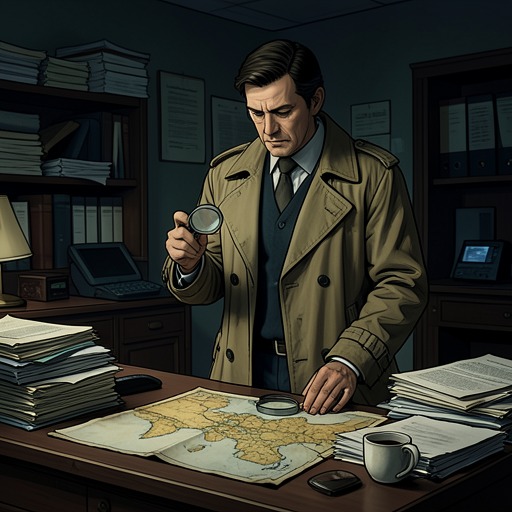
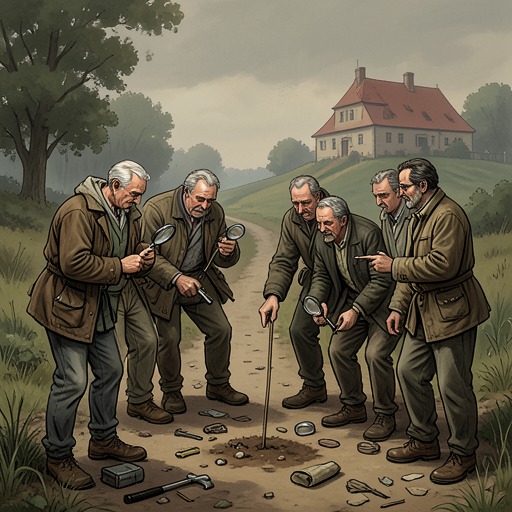
Killers of the Flower MoonTom White’s federal investigation of the Osage murders was a struggle not merely to identify killers but to distinguish evidence from the stories powerful people had arranged to circulate. White inherited a case crowded with leads and compromised by local influence; his defining task was to build a chain of proof sturdy enough to survive in court, even as witnesses were intimidated and evidence itself was manufactured.
From Leads to Proof
White found that earlier investigators had not simply failed to discover leads. They had accumulated too many, then abandoned them without corroboration or without conclusively disproving them. Reports repeatedly traced back to private detectives and local lawmen whose claims rested on hearsay. In a county where corruption appeared to reach across institutions, even a plausible account might be deliberate disinformation. A persuasive story was not a case: White wanted evidence that could be proved in court, not a man condemned because an investigator had constructed an appealing narrative.
That discipline also meant confronting the danger of treating repetition as confirmation. A lead could travel through officials and informants yet still depend on one dubious source. White’s method was to separate what investigators had heard from what they could establish, and to assemble what he called an unbroken chain of evidence. The distinction became urgent because witnesses were reluctant to cooperate amid prejudice, corruption, and fear of being killed. White made himself the public face of the inquiry while most of his agents worked undercover, an arrangement intended to pursue leads without exposing the whole team to the same risks.
The investigation discovered how easily a false account could masquerade as a breakthrough. A Kaw woman had supposedly reported that Rose Osage confessed to shooting Anna Brown in a car, leaving her body at Three Mile Creek, and discarding bloodstained clothes there. But the autopsy did not indicate that Anna’s body had been moved after death, and descriptions of the scene reported no trail of blood between the car and the creek. Rose and Joe Allen had an alibi confirmed by the owner of their rooming house. When agents questioned the Kaw woman, she admitted that Rose had never confessed to her: a white man had written the statement and forced her to sign it. The Dictograph set up by Mollie Burkhart’s family had recorded no incriminating statements, and Rose’s clothes were never found in the creek. The supposed confession did not merely fail to prove guilt; its source revealed an effort to plant evidence and misdirect the inquiry.
Leaks and Compromised Allies
By the end of the summer, White suspected that the inquiry had a mole. An agent questioning a local attorney who had reportedly tried to obstruct the government’s probe found that the attorney knew details of the Bureau’s internal work; he eventually acknowledged having seen some reports and had the chance to see more. The discovery gave a name to a danger that had shadowed the investigation: reports were reaching unauthorized people, and a U.S. attorney found Bureau papers missing from his office. One federal prosecutor insisted that his report not be shared with any representative of the State of Oklahoma. The leaks were more than administrative disorder. They threatened agents’ safety and made loyalty itself uncertain.
The danger also ran through the private investigators who were supposed to help solve the cases. Two private detectives, one associated with the Burns agency, tried to expose Kelsie Morrison as a Bureau informant. They spread word of his cooperation to local officials and had him detained on a fabricated robbery charge. Agent Burger judged the conduct damaging to the investigation and suspected that someone was paying the detectives to obstruct it. Released from jail and frightened, Morrison pleaded with the agents to catch the killers before they caught him; Burger warned him against double-crosses and traps. Morrison’s position made the inquiry especially precarious: an informant could be a source of access and, at the same time, a target whose exposure put both him and the investigation at risk.
Despite those obstacles, the Justice Department reported that in the months after White took command, investigators had developed new angles and brought renewed energy to the work. Yet progress in gathering leads had not solved the central evidentiary problem. The agents had no physical evidence or reliable witnesses proving that William K. Hale had carried out or ordered the killings of Mollie Burkhart’s family. Hale’s public standing and patronage network, which reached into law enforcement, prosecution, the courts, and state government, made an uncorroborated accusation particularly vulnerable. Reports portrayed Scott Mathis, a guardian of Anna Brown and Lizzie, as corrupt and under Hale’s influence; they also described police chiefs, a Fairfax mayor, a county prosecutor, a banker, and even a federal official as beholden to Hale or aligned with his faction. The breadth of that reported influence explained why suspicion alone could not bring him down: the investigation had to establish a case that would withstand the very network accused of protecting him.
Turning to the Outlaws
As distrust of local white officials hardened into a strategic problem, White looked for witnesses among outlaws in the Osage Hills. Reports suggested that some desperadoes knew about the murders; unlike influential citizens who might be shielded by local alliances, recently arrested or convicted criminals could be approached with leverage. One lead pointed to Dick Gregg, a twenty-three-year-old former associate of the Al Spencer Gang, then serving a ten-year robbery sentence in a Kansas penitentiary. Gregg had hinted that he knew something but resisted betraying a confidence. With the help of Comstock, who knew Gregg’s father, the Bureau persuaded him to cooperate. White later remembered Gregg as a small, fair-complexioned young man with blue eyes and light brown hair; a prosecutor, by contrast, described a calculating criminal capable of murder. The gap between appearance and reputation echoed the investigation’s larger difficulty: neither a polished story nor a person’s surface could substitute for corroboration.
A new lead arrived in late October 1925, when an aide to Oklahoma’s governor told White that a prisoner at the McAlester penitentiary claimed to know a great deal about the murders. White and Agent Frank Smith went to question Burt Lawson, an Osage County man who had been charged with killing a fisherman in 1922 and later convicted of second-degree burglary. White chose a room off the warden’s office, an unfamiliar setting in which he hoped to unsettle the prisoner. Lawson said he had placed and ignited the explosive that destroyed Bill Smith’s home, and implicated Ernest Burkhart and William K. Hale as the men who had persuaded and assisted him. On October 24, White sent J. Edgar Hoover a telegram reporting the confession; Hoover replied with congratulations. For the first time, White had a witness whose account appeared to connect Hale directly to the Smith house bombing.
The apparent breakthrough came with danger attached. White and his agents still needed to corroborate Lawson’s account and determine whether it explained how the bomb had been prepared and delivered. Meanwhile, Comstock was receiving threats and sleeping in his Pawhuska office with a .44-caliber English Bulldog beside him. A relative later recalled that Comstock found sticks of dynamite behind a curtain when he went to open a window. The threat made the stakes of the investigation immediate, but it did not make Lawson’s story more reliable: White’s next confrontation with Burkhart would expose how readily a dramatic confession could become another misleading account.
When White confronted Burkhart with Lawson’s claim that he had been the contact man for the bombing, Burkhart denied it. White considered whether Lawson had invented the story to win a reduced sentence, repeated prison rumors, or been drawn into another of Hale’s plots. The doubt put the case at risk: if Lawson’s confession could not be trusted, White needed Burkhart to give an account of his own. During hours of questioning, White and Frank Smith reviewed the circumstantial evidence in the murders. Burkhart appeared remorseful at moments, but stiffened whenever Hale was mentioned, seeming more afraid of his uncle than of the law.
After midnight, Burkhart said he was ready to tell his story, but would speak only to White. White reminded him of his rights, and Burkhart signed a statement affirming that he had been promised no immunity and was speaking of his own accord. He described his boyhood admiration for Hale and his habit of following his uncle’s instructions. According to Burkhart, Hale had planned the Smith house bombing knowing that Rita and Bill Smith, along with other family members, would be inside; Hale had argued that Burkhart’s wife would receive the money. Burkhart said he had passed Hale’s message to John Ramsey through Henry Grammer’s associate, Asa Kirby, and was at home with Mollie when the explosion occurred. He denied that Lawson had participated; Lawson later admitted that his bombing story was a lie based on what he had heard in jail. The reversal exposed a central weakness in the inquiry: a confession could seem to close the gap between suspicion and proof, yet still require independent testing before it could be trusted.
The Confession Widens the Case
Burkhart’s account reached beyond the Smith house bombing. He identified John Ramsey as the gunman who killed Henry Roan, whose death Hale had arranged to collect life-insurance money. White acted on the disclosure at once, instructing John Wren to take Ramsey into custody. Faced with Burkhart’s signed statement, Ramsey gave his own account, turning what had been an accusation into a second, detailed confession.
Ramsey said that in early 1923 Henry Grammer had told him Hale wanted an Indigenous man killed. He agreed, lured Roan into a canyon with the promise of whiskey, drank with him beside his car, and shot him in the back of the head as Roan prepared to leave. Ramsey’s account placed the killing within a chain of arrangements linking Hale, Grammer, and the hired gunman. It also exposed the racial contempt through which Ramsey framed the crime: he referred to Roan as “the Indian” and claimed that white people in Oklahoma regarded killing an Indigenous person as no more serious than it had been centuries earlier.
Burkhart also named the mysterious third man associated with Anna Brown before her death: Kelsie Morrison, the Bureau’s own informant. Morrison had not merely been passing information back to Hale and his associates; according to Burkhart, he had fired the fatal shot that killed Anna. The disclosure overturned Morrison’s supposed role in the investigation and revealed how an apparent source of intelligence could instead be embedded in the conspiracy. Authorities moved to arrest him as they responded to another urgent concern: Mollie Burkhart appeared close to death, and officials suspected that she had been slowly poisoned.
An agent later reported that Mollie’s health returned immediately after she was removed from Ernest Burkhart’s and Hale’s control. Burkhart never admitted knowing that his wife was being poisoned. Whether he concealed knowledge or Hale had kept that plot from him remained uncertain; the record did not settle the question. His confession thus brought several strands of the investigation into focus while leaving a terrible limit visible: even when witnesses identified killers and accomplices, the full extent of what they knew—and of the conspiracy itself—could remain beyond proof.
The Cases Left Open
The investigation’s later record did not support the clean ending suggested by the life sentences imposed on Hale and his conspirators. In retrospect, the narrator identifies gaps in what the Bureau had proved: the cases were treated as closed even though Hale had not been connected to all twenty-four murders. The killings of Barney McBride in Washington, D.C., and W. W. Vaughan, who was thrown from a speeding train, remained especially unresolved. The known group of Hale associates—including Bryan Burkhart, Asa Kirby, John Ramsey, and Kelsie Morrison—had not been shown to have followed McBride to the capital or to have been with Vaughan on the train. The convictions therefore marked a decisive legal result, not a complete accounting of the murders.
Vaughan’s family preserved a separate record of the loss. Decades later, his descendants brought out binders filled with newspaper clippings, his death certificate, and an informant’s statement that Vaughan had said shortly before his death that he had gathered enough evidence to put Hale in the electric chair. His widow, Rosa Vaughan, was left to raise ten children without income. The family moved from a two-story house into a storage garage, and Osage families helped feed them; some of the children lived with Osage households, learned the language and traditional dances, and found safety among the people whose murders Vaughan had investigated. The family’s hardship shows that the violence reached beyond its immediate victims, while the surviving papers preserve both a possible motive for silencing Vaughan and the limits of what his relatives could establish about his death.
Archival research raised a further possibility involving H. G. Burt, a close associate of Hale. Secret grand-jury testimony from 1926 did not list Burt as a witness, but an insurance agent testified that Burt had recommended another Native American as a possible target for an insurance scheme. An informant separately described Burt and Hale as close associates who had divided money obtained from George Bigheart. Hale later claimed $6,000 from Bigheart’s estate using a bogus creditor’s note, while Burt had tried to obtain $10,000. Those sums offered a possible financial connection, but they did not establish who killed Bigheart, and the Justice Department did not prosecute Hale for that death or pursue Burt further. Investigators nevertheless described Burt as a murderer, and records showed that he became guardian to Bigheart’s young daughter, giving him access to the money inherited by her and her mother.
The evidence linking Burt to Vaughan’s death accumulated through different, imperfect sources. Court records showed that Burt took money Bigheart had intended for Vaughan, despite presenting himself as Vaughan’s close friend. Newspaper accounts placed Burt aboard the train with Vaughan when he traveled from Oklahoma City, and reported that Burt later notified others of Vaughan’s disappearance. An FBI informant, asked whether he knew anything about the killing, answered that he thought Burt had carried it out. Notes from an unpublished interview with the Fairfax town marshal also implicated Burt and said that a local mayor had helped throw Vaughan from the train; the marshal recalled that Burt feared the Bureau’s investigation and moved to Kansas in 1925. These records made Burt a substantial suspect, but they remained circumstantial and could not resolve exactly how Vaughan died or who physically killed him. The inquiry’s final boundary was therefore not a lack of suspicion, but the difference between a pattern that pointed toward a man and proof capable of closing the case.
Retrospective Limits of the Record
The investigation’s history is told alongside a later effort to test what its apparent resolution left unproved. The retrospective narrator can compare Bureau files with grand-jury testimony, probate records, newspaper accounts, informant statements, and papers preserved by Vaughan’s family—materials created for different purposes and carrying different degrees of certainty. Their convergence can sharpen suspicion without turning every suspicion into an established fact. That distinction makes the record itself part of the story: the Bureau’s convictions ended prosecutions, but later scrutiny reopened questions that its case files had not conclusively answered, while the people implicated in those unresolved deaths could no longer answer for themselves.
The Community Under Investigation
The investigation’s urgency was visible in the routines of Osage life. White saw lights burning around Osage homes night after night, children kept from going into town alone, and residents selling their houses and leaving for distant states or countries, including Mexico and Canada. The departures were not simply movement away from danger: they registered a community’s doubt that the authorities could protect it. Osage residents also questioned why they had to use their own money to fund a United States Department of Justice investigation, and why no one had yet been arrested.
An Osage chief’s protest joined that immediate fear to a longer history of relations with the United States. He recalled that his people had made peace with white Americans and laid down their arms, yet now he and his fellow tribesmen were made to suffer. The statement sharpened the contradiction at the heart of White’s assignment: the government was investigating violence against a people who had reason to distrust its protection. White’s turn toward outlaw witnesses offered a way around local officials’ resistance, but it could not by itself repair that distrust or undo the community’s departures.
Hindsight and the Investigation’s Blind Spots
The later account turns the investigation into a study of what evidence can reveal only after the danger has passed. Its narrator can see that Mollie Burkhart did not know her husband was implicated in the attacks on her family, while White could not recognize that Lawson’s confession was false or discern Hoover’s motives. Those gaps do not make the investigation’s work meaningless; they show how a case assembled under pressure could remain vulnerable to deception even as it sought to expose it. The reader’s advantage comes from records gathered across time, not from any single investigator’s complete view, and the result is a history in which convictions and unanswered questions remain side by side.